
Paonia Criminal History Checks
No single Paonia database combines police narratives, bookings, court filings, and Colorado history. A sound search follows the record from the first agency contact to the office that now holds each part. Start with a name, approximate date, location, and any case, citation, or booking number. Those details help the correct custodian distinguish one event from another.
- Identify whether Paonia Police, the Delta County Sheriff’s Office, or another agency handled the event.
- Use the official Paonia Police Department page to confirm the current report-request channel before submitting a request.
- Ask Paonia Municipal Court about a town ordinance citation, municipal docket, order, or bench warrant.
- For a jail intake or state charge, contact DCSO and Delta Combined Court as separate custodians.
- Use CBI ICHC for releasable statewide name-based history, or the CBI fingerprint process when reviewing your own identity-based record.
This sequence prevents a common error: asking the town for a county jail file or asking Delta County to produce a Paonia police report. The official county records-routing page expressly separates municipal, sheriff, and court custodians.
Paonia Police or DCSO Records?
The badge on the initial contact determines where the incident or arrest narrative begins. Paonia Police keeps reports created by its officers. If a DCSO deputy made the stop or arrest, the Sheriff’s Office is the report custodian instead. Colorado State Patrol and other agencies likewise keep their own reports. A place inside Paonia does not by itself prove that Paonia Police owns the file.
Ask which agency supplied the case number, then direct the request there. If that is unclear, give the date, location, and involved name when contacting the likely office. This small check can prevent a needless drive between the North Fork and the county seat. It also matters because Delta County’s general administrative portal does not hold municipal police records.
Records at the Paonia Police Department
The Paonia Police Department is the town custodian for records its officers create. Its official page is the right place to confirm the current counter, telephone, email, hours, request form, and any charge before making a request. The research did not verify those details through the blocked page, so they should not be taken from a directory or guessed.
The town’s Paonia Police page supplies the official starting point shown below. It keeps the request tied to the town rather than an unofficial listing.
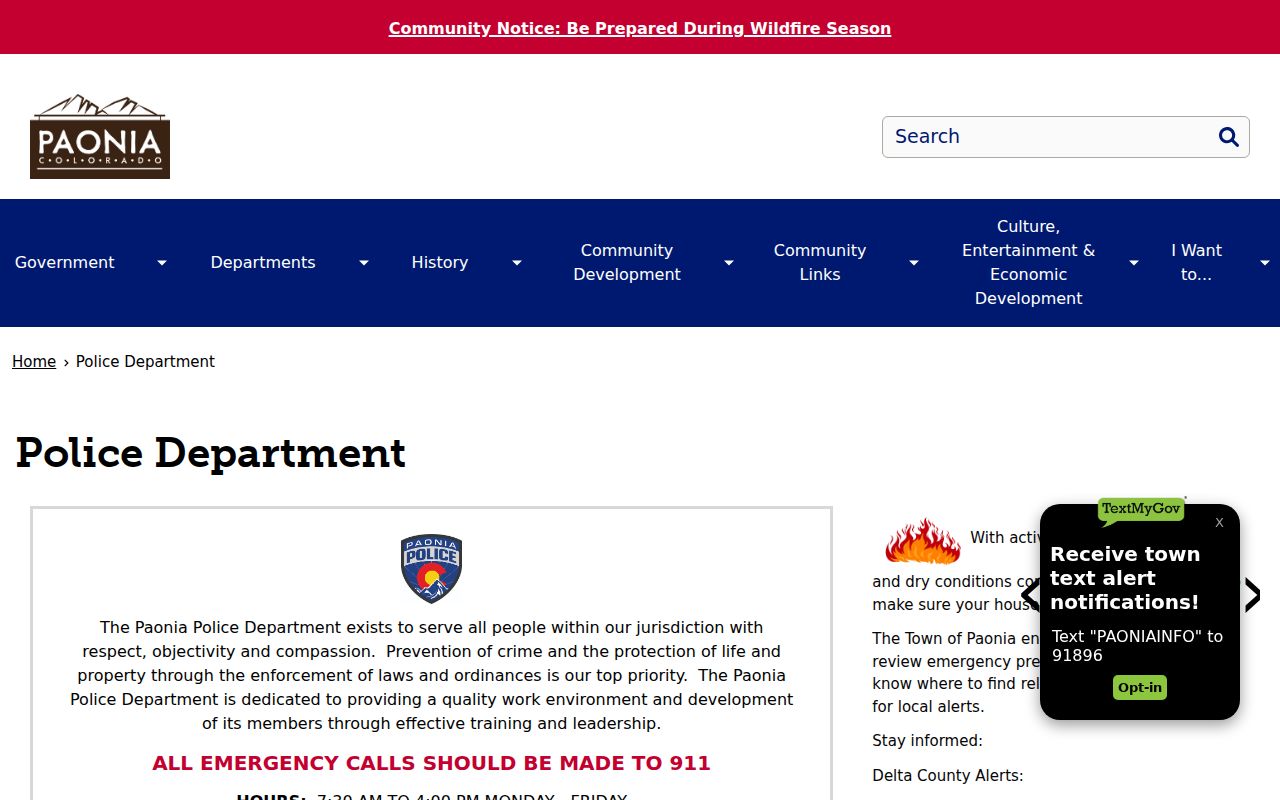
The department page should be checked immediately before a visit because counter details and forms may change. A useful request identifies the event, exact record wanted, and the requester’s connection when relevant.
Confirm Paonia Record Access Before Driving
Paonia anchors the North Fork area, well away from the county-seat offices in Delta. DCSO’s civil mileage schedule places Paonia and Bowie with Crawford in a $24 round-trip mileage band. That civil fee is not a criminal-record request fee. It is useful here only as an official measure of the distance that can make a wrong-office trip costly.
Before traveling, confirm whether the record belongs at the town police counter, municipal court, Sheriff’s Records Management, jail control, or Delta Combined Court. Ask the custodian what identifiers, signature, payment method, and delivery choice are required. If a town page does not show a public name search, do not assume a search exists. A direct clerk or records request is the documented fallback.
Booking and Arrest Records in Paonia
A Paonia arrest can create at least two separate records. The arresting agency makes the probable-cause or incident narrative. If the person enters county custody, DCSO creates the booking record at the Delta County Detention Facility, 555 Palmer Street. Paonia has no confirmed town inmate facility, public booking search, arrest blotter, warrant portal, or official agency app.
For current custody or bond information, call DCSO jail control at 970-874-2021. No official public county inmate roster was found. For a documented booking record, use the signed DCSO records form. The DCSO initial charge is $5 and includes up to thirty minutes of research or redaction and four pages; the form lists added copy, research, supplemental-report, and media charges.
A current custody answer is not the same as a report or final case outcome. The town narrative describes the officer contact, the jail file documents intake, and the court file shows what prosecutors later filed. An arrest is an allegation and does not prove guilt.
Two Paonia Requests for One Arrest
When Paonia Police makes an arrest followed by county booking, one request rarely produces the whole record. Request the police narrative from Paonia and the jail or booking material from DCSO. If a DCSO deputy made the arrest, request both the agency report and booking record from DCSO, but specify each product because they document different stages.
Once charges are filed, the clerk becomes a third source. Filed charges can differ from arresting charges. A judge’s bond order, a dismissal, plea, verdict, sentence, or warrant status belongs in the court file, not in the original town report. Readers seeking the later outcome can use the site’s Delta County court case lookup for the county and district route.
Use the same event details across each request so every office can locate its part without being asked to release another custodian's file. Strong identifiers include the exact incident date, location, full name, date of birth, town report number, DCSO booking or name number, and court case number. Not every number exists at the first stage, so keep each identifier supplied as the event moves from police to jail and court.
The Paonia Municipal Court File
Paonia Municipal Court is the town channel for ordinance matters. Its official public page does not provide a verified name-search portal in the research. Contact the court through the current official page and give the cited person’s name, citation or case number if known, approximate date, and the exact docket entry, order, or copy needed.
The official Paonia Municipal Court page is the source for the court channel pictured below. Current session, clerk, request, and payment details should be confirmed there rather than inferred.
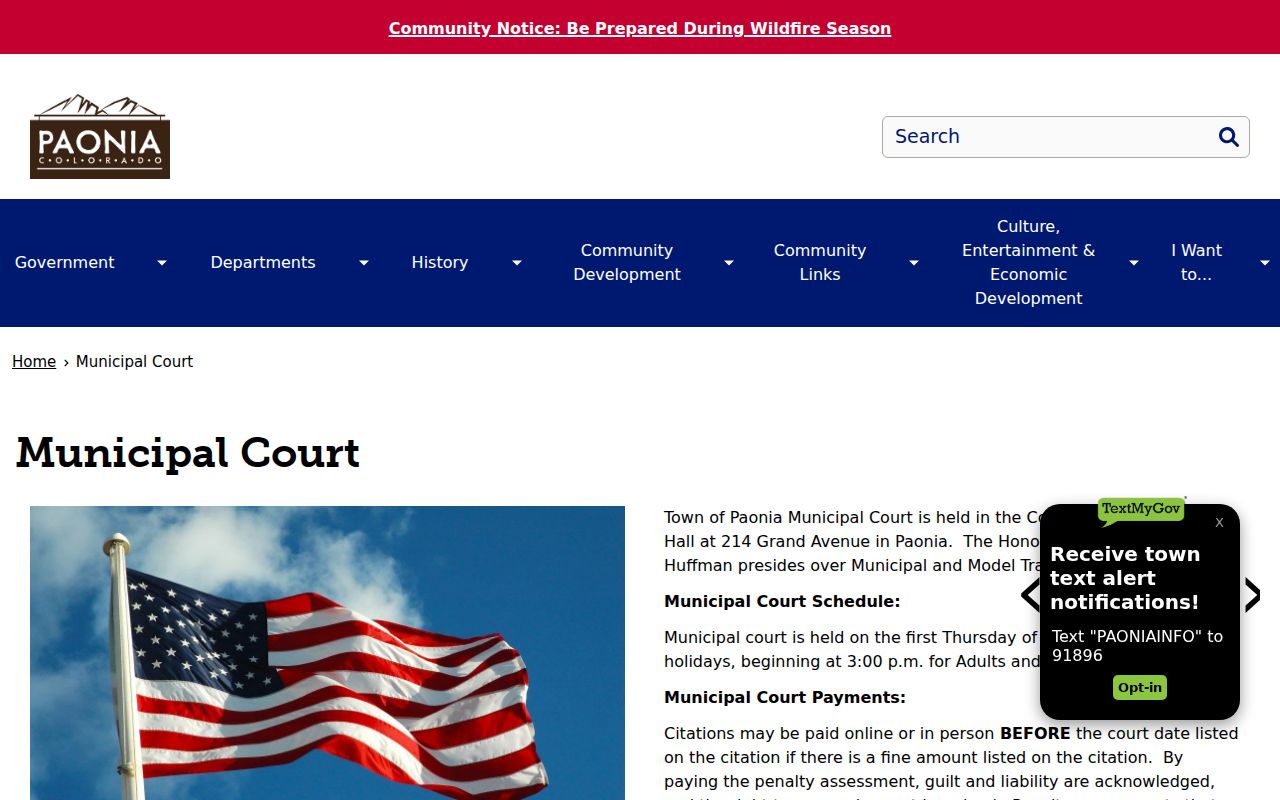
The page anchors the request to the town court, but state misdemeanors and felonies belong in Delta Combined Court, not the municipal file.
| Court Name | Paonia Municipal Court |
|---|---|
| Case Types Heard | Town ordinance matters and related municipal cases |
| Case Lookup Channel | Official municipal court page and direct clerk request; no verified public name-search portal |
| What the Docket Shows | Municipal citation, events, orders, disposition, and any town-court warrant entries that are public |
| Copies & Fees | Confirm the current copy method, price, payment, and certification options with the court |
Paonia Town Court Versus County Court
The charge type decides the court. Paonia Municipal Court handles town ordinance cases. Delta County Court handles state misdemeanors, petty offenses, traffic matters, and initial proceedings within its authority. Delta District Court handles felonies. The two state trial levels operate through Delta Combined Court at 501 Palmer, with the clerk reached at 970-874-6280.
A single encounter may produce related files in more than one court. A municipal citation stays with Paonia, while a state criminal charge from the same episode can create a separate Combined Court case. Ask each clerk for its own register, filings, and orders. A docket marked closed does not alone establish a conviction; read the disposition for every charge.
How Paonia Records Reach the County
Paonia Police creates the local report. DCSO creates a custody file if the person is booked at the county jail. A municipal ordinance matter proceeds in town court, while a referred state charge moves through the Seventh Judicial District Attorney and Delta Combined Court. Reporting agencies then associate releasable arrest and disposition data with the CBI history cycle.
Record flow: Paonia Police Department › Delta County Courts › Colorado Bureau of Investigation
This is a flow of related data, not one shared file. Recent events may appear first with police or jail control. Filed charges and outcomes appear later with the clerk. CBI ICHC is a Colorado-only, name-based history product and can lag or omit nonpublic material. For the fullest self-review, use CBI’s fingerprint record-review and challenge process.
Paonia Town Records Stay With Paonia
Delta County’s records-routing guidance says its general NextRequest system does not hold municipal, court, or law-enforcement files. That boundary is especially important for a North Fork request. A Paonia police or municipal court record remains with the town custodian even though related booking and state case records may sit in Delta.
The official Town of Paonia site is the source for the town hall view below and the authoritative department directory.
The town site should be the first checkpoint for current local contacts, while county and state sites remain the proper routes for records they maintain.
Sealing a Paonia Municipal Record
Colorado generally calls adult record relief sealing. Municipal convictions use the Judicial Branch’s JDF 682 through JDF 686 forms and are filed with the municipal court that handled the case. Eligibility depends on the charge, outcome, waiting period, and exclusions in current law. A town case should not be filed as though it were a Delta District or County Court case.
Sealing is not destruction. The court’s order directs named custodians to restrict covered records while authorized access can remain. If statewide history still shows an incorrect or missing outcome, obtain the disposition or sealing order and use CBI’s challenge or update process. Juvenile matters use expungement procedures rather than the ordinary adult municipal sealing route.
Municipal and state cases must also be identified separately. A Paonia ordinance judgment belongs with the town court, while a state misdemeanor or felony belongs with Delta Combined Court. The court that entered the judgment is the place to confirm the case number, disposition, and available procedure. Police and DCSO custodians act on an entered order covering their records; they do not decide whether a case qualifies for relief.
Paonia Record Access Rules
Public access depends on both record type and custodian. CORA governs ordinary town administrative records, CCJRA governs criminal-justice records held by police, and Judicial Branch rules govern court files. Active investigations, juvenile material, sealed records, victim or witness identifiers, medical details, and security-sensitive portions may be withheld or redacted.
Key Statutes:
Colorado Open Records Act, C.R.S. §§ 24-72-200.1 et seq. governs access to ordinary public records subject to statutory exceptions.
Colorado Criminal Justice Records Act, C.R.S. §§ 24-72-301 et seq. controls inspection and release of police and other criminal-justice records.
Chief Justice Directive 05-01 sets access levels for public, protected, restricted, suppressed, and sealed court records.
C.R.S. §§ 24-72-701 through 24-72-710 provide Colorado’s adult criminal-record sealing framework.
Make a narrow request to the correct office and identify each item, such as a narrative, dispatch record, photograph, court order, or certified disposition. A denial of one protected portion does not necessarily mean every part of the file is closed.